Vincent Dutrait has become a defining name in modern board game illustration. Over nearly three decades, his distinctive work has appeared across a vast range of games and worlds, becoming instantly familiar to players throughout the industry. In this interview, he reflects on a career shaped by curiosity and constant evolution, the relationship between artists and publishers, what makes board game art memorable, and where illustration may be heading next.
“Success for me today means being able to spend my time on things I genuinely enjoy while continuing to evolve.”
The making of an illustrator
Looking back at artwork you created ten, fifteen or twenty years ago, what do you see now that you could not see at the time, both in the work itself and in the illustrator you were then?
Ten or fifteen years ago, both the illustration world and the boardgame world were quite different from what they are today. Expectations, uses, and formats have changed, so some of the illustrations I made back then would certainly be approached differently today.
But what I mostly see now is a lack of maturity in the way I approached a project as a whole. Every project deserves the same level of commitment and seriousness, but I’ve learned to distribute my time and attention better within it. A cover, for example, probably deserves more attention than a small decorative element that will only be seen briefly on a component. Not because I want to do less, but because I’ve learned to decide more carefully where to do more.
I also think I used to put a huge amount of emotion and personal investment into certain projects. Over the years, I’ve learned to keep a certain degree of distance—not to be less involved, but to have enough perspective to remain as objective as possible. As I often say, I don’t work for myself, or only for the publisher: first and most important, I work for the players, viewers, or readers. That distance helps me not lose sight of the purpose of the image and where it is ultimately going.
Technically, I’ve also evolved a lot. When I look at older illustrations, I can see stages of the process that used to be quite laborious and that I’ve gradually simplified through new tools, new materials or simply by rethinking the way I work. The point is to work in better conditions and remove as many physical, technical or even mental barriers as possible between what I imagine and what I create.
That may ultimately be the most significant change: my ability to step back and see the bigger picture.
Has your own definition of a successful career changed over time? What mattered to you when you were trying to establish yourself, and what matters to you now?
Being an illustrator is a slightly unusual profession, somewhere between purely artistic creation and commissioned work based on a brief. Even when the project isn’t yours to begin with, you need to find a way to make it your own and inject your own sensitivity into it.
For years I worked for other people, on their worlds, their games, their stories, but project after project, I was also gradually building my own vision and universe. At first, my idea of success was mainly about carving out my own path: working more in fantasy, adventure and certain worlds that appealed to me more than others, and above all developing something other people weren’t offering.
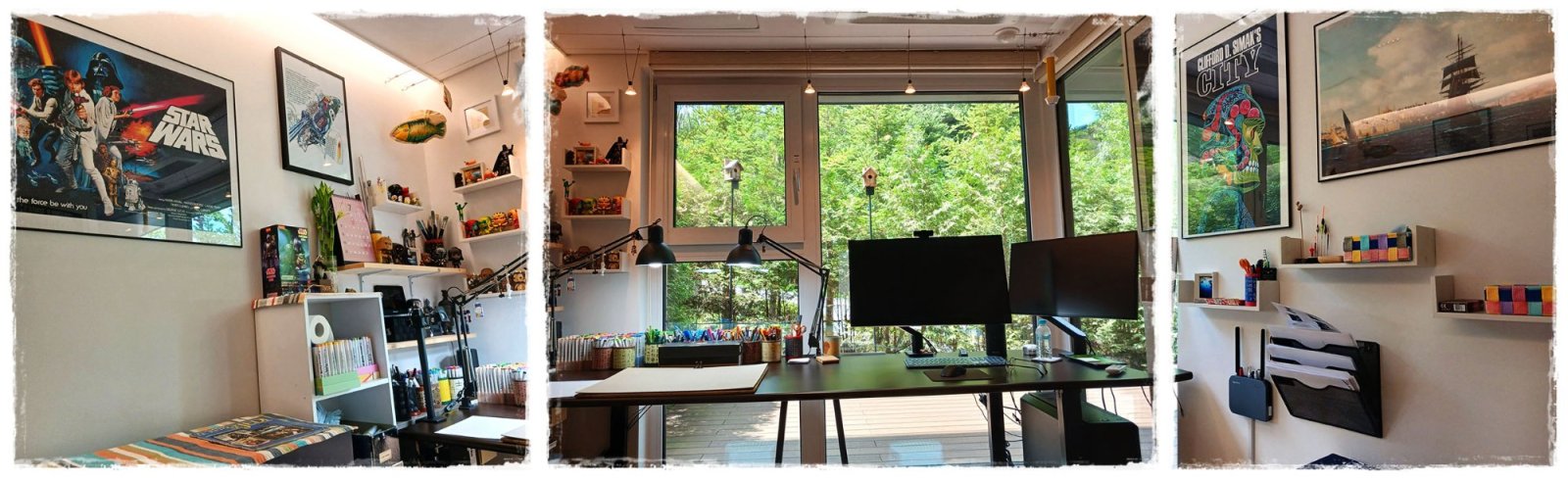
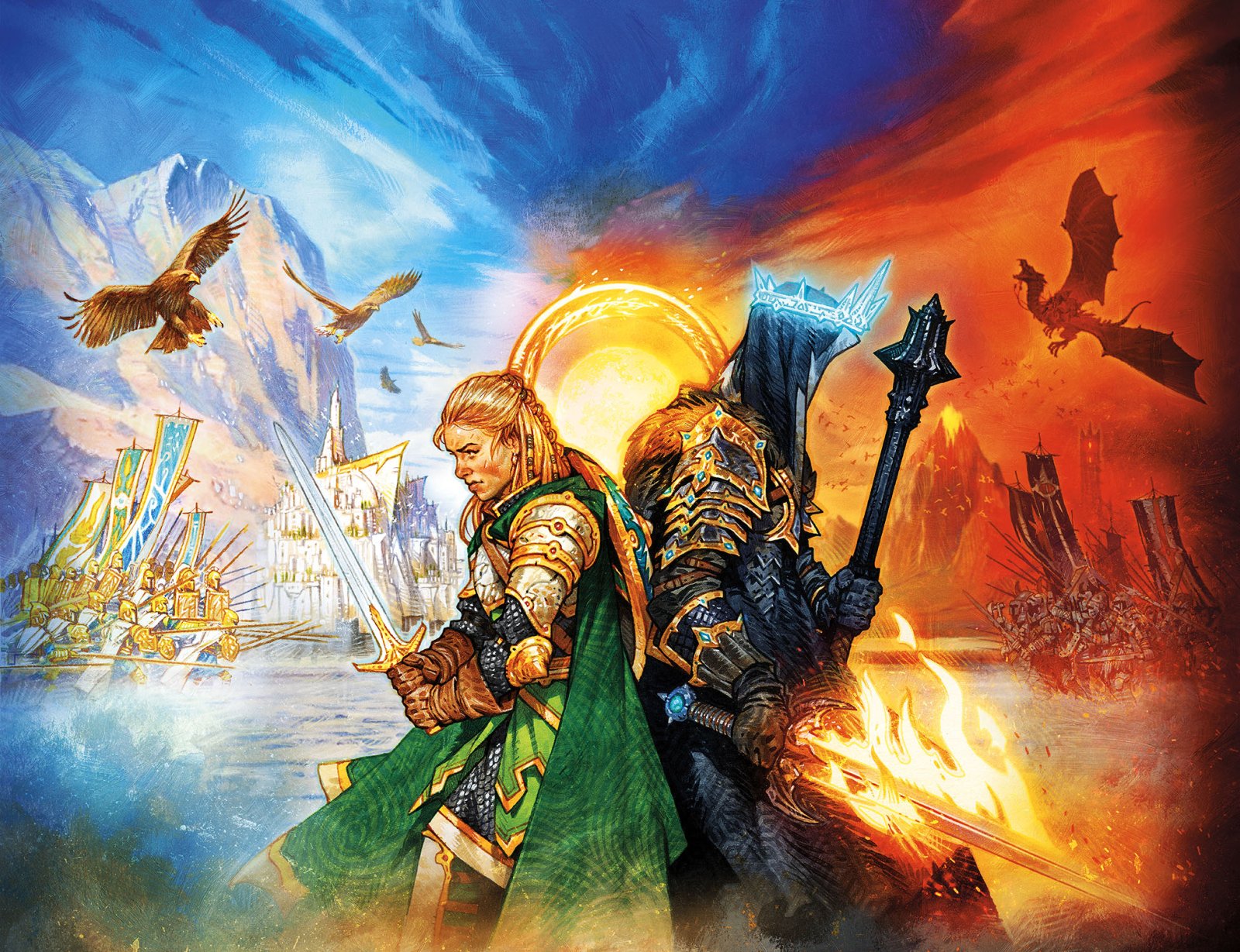
My mentor, Jean-Michel Nicollet, once told me: “If you can’t be the best, make yourself indispensable”. That stayed with me. My goal was to reach the point where, when a certain type of project appeared, someone would naturally say: “That one goes to Vincent”. Over time, I got there, and I now work on worlds that once felt like genuine dreams to me, such as The Lord of the Rings or Star Wars. But obviously I can’t stop at... The Lord of the Rings, Star Wars, what else? I’m fifty, my career is far from over, and there are still so many things I want to do, discover and, hopefully, encounter.
What excites me now is imagining myself ten years from today and wondering what project I’ll be working on at that exact moment. If I look back at where I was ten years ago, I could never have predicted some of the projects that came afterwards. That’s why I’m gradually changing the way I work. In a market with a constant stream of new releases, I prefer fewer projects, more carefully chosen, under the best possible conditions. Success for me today means being able to spend my time on things I genuinely enjoy while continuing to evolve. And I’m convinced that when I’m happy and fully engaged in a project, it inevitably gets into the images and, in the end, is felt by the players.
“A lasting career never rests only on the quality of the images.”
You once said that finding work when starting out as an illustrator can be relatively easy, but that still being in the profession ten years later is much harder. What do you think separates illustrators who build lasting careers from equally talented artists who eventually struggle to move forward?
I don’t think what allows an illustrator to last is really a matter of “style”. I’m not very fond of that word. The same goes for “talent”: talent is something you learn, work on and build. I’d rather talk about vision and sensitivity. What matters is being able to offer something personal, a recognisable visual language: the drawing, the colors, the light, the way characters feel alive, the way an atmosphere is built.
Personally, I spend a huge amount of time looking through books and artbooks, trying to understand how other artists work, contemporary or historical, often in fields quite far removed from my own: wood engraving, Japanese prints, signage, cartography, technical illustration, natural history museum dioramas... There is something to learn everywhere.
I think you need a clear direction without ever developing “tunnel vision”. Stay curious, stay open, keep looking. Building a career that lasts ten or twenty years, while continuing to evolve and becoming recognisable, is much harder. Competition is enormous and the barrier to entry into the image world feels far too low to me: it has become incredibly easy to produce images, show them everywhere and, sometimes, do pretty much anything. Building something personal, coherent and lasting is another matter entirely.
In the end, maybe the answer is quite simple: work, work, work. You need to accept being challenged, learn discipline and organisation. People often talk about this as a “passion job”, but at some point you also have to go beyond that. Passion gives you strength, but it doesn’t replace work or discipline. A lot of illustrators are freelance, set their own hours and are basically their own boss. That freedom can be wonderful, but it also requires a lot of rigour.
And then there are the people around you. Being well surrounded is absolutely essential: having people who support you, but who are also able to push you to your limits, disagree with you, make you question yourself, or simply give you what you need to move forward. A lasting career never rests only on the quality of the images. I often keep this quote attributed to Edgar Degas in mind: “You shouldn’t be proud of what you’re going to do today, but of what you’ll do later—otherwise there’s no point in working”. That’s quite close to the way I see this profession.
What makes an image work
After seeing so much of your work move from the drawing table into players’ hands, what have you learned about the difference between what an illustrator focuses on while creating and what players ultimately notice, respond to or remember?
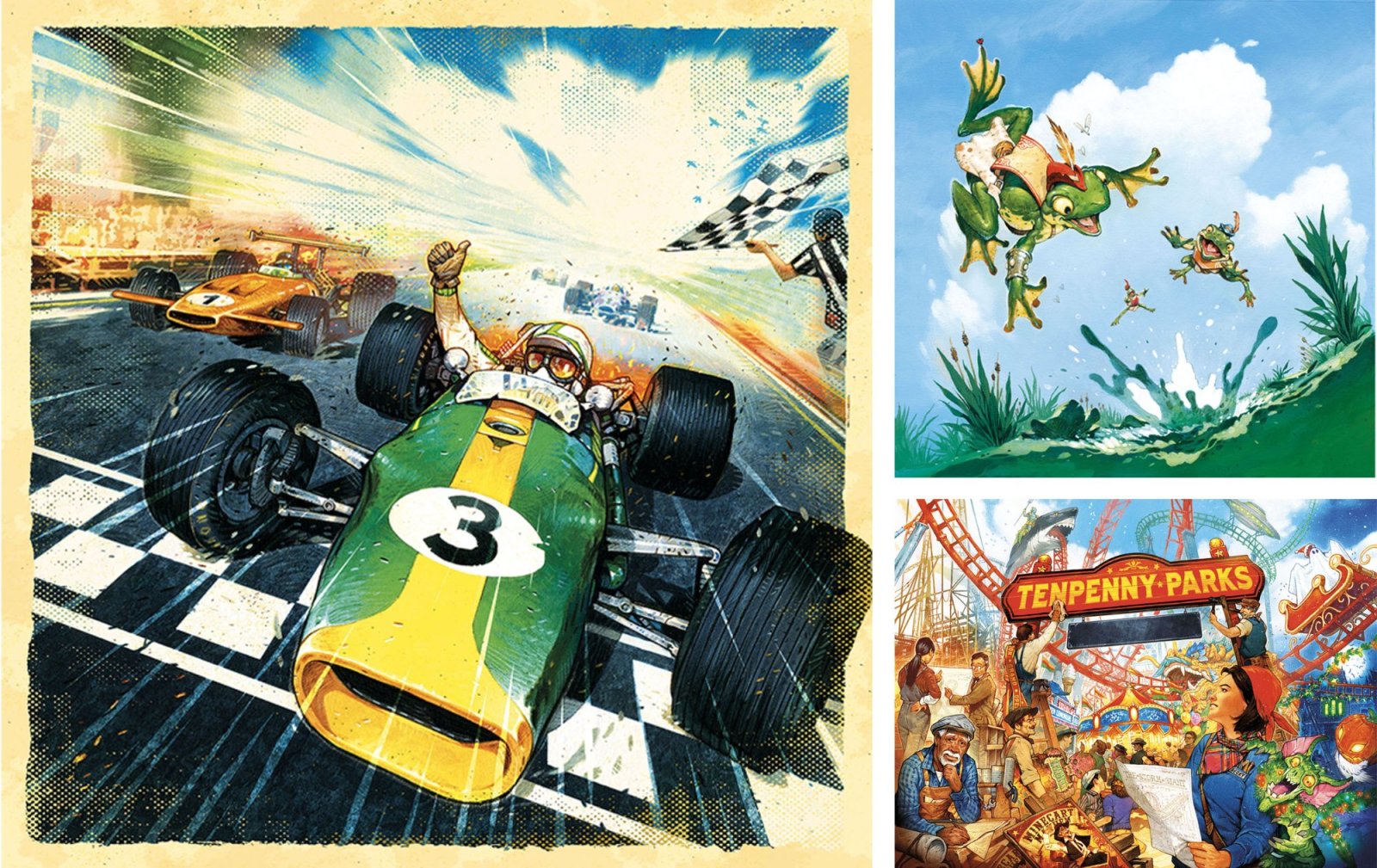
The risk sometimes is becoming so immersed in an image, and wanting to enjoy making it so much, that you lose sight of what it actually has to accomplish. In boardgames, an image is functional first. Before being beautiful or appealing, it has to do something: support the gameplay, reinforce a mechanism, communicate an effect. The challenge is then to make that function attractive, readable, enjoyable and immersive, so that the player immediately understands what they are looking at while also wanting to enter the world of the game. That’s when I’m happiest with the result: when the equation works, when players enjoy playing with my illustrations and those images allow them to project themselves into a story, an adventure or an atmosphere.
Over time, something else can happen as well. Once you start becoming known in the field, the illustrator can, to some extent, become a “selection criterion” in the huge number of games being released. A player might think: “I like the projects Vincent Dutrait chooses to work on, his choices speak to me, so this one interests me”. That inevitably comes with a certain responsibility. Players no longer necessarily judge an illustration in isolation simply because they find it attractive: they can also develop a relationship of trust with a body of work, a set of choices, a way of representing things.
Maybe that’s the delicate job of a boardgame illustrator in the simplest sense: making the useful enjoyable.
“I will always prefer a very good idea carried by an imperfect drawing to a bad idea executed perfectly.”
With so many games competing for attention and the overall visual standard becoming increasingly high, what does originality mean to you today? What allows a game, and an illustrator, to develop a visual identity that people genuinely remember?
I don’t think you necessarily need to chase originality at all costs. I also make a real distinction between singularity and originality pursued for its own sake. You can make something very classical, very well structured and very well executed, and it can work extremely well. On the contrary, I see a lot of games trying so hard to differentiate themselves that they sometimes forget the fundamentals: how to construct an image so that it reads clearly, how to integrate a title without interfering with the image, how to tell a scene properly. If you focus too much on being original, you can lose sight of what simply makes an illustration work.
For me, it comes more from having a strong foundation than from a surface effect. I will always prefer a very good idea carried by an imperfect drawing to a bad idea executed perfectly. Today we are surrounded by images constantly, and the most eye-catching ones attract attention very easily. But once that initial effect is gone, sometimes there is no second reading, no depth, no real reason to go back to them. In boardgames, I believe strongly in an equation between three elements: gameplay, theme and visual representation. When those three dimensions are tightly intertwined, the player stops merely manipulating mechanisms and starts experiencing something. Around the table, they might say “I’m harvesting wheat” rather than “I’m taking a yellow cube”. These can be tiny details, but they contribute enormously to the play experience.
In my own case, if you look at the full development time of an illustration—from the first conversations to delivery of the final image—I may spend half of that time, sometimes even three quarters, researching and above all thinking: what should I show, why, how, from what angle, with what hierarchy, what atmosphere, what meaning? That’s often where the most important work happens. If the technique is under control, the actual execution becomes much more fluid. I sometimes feel we rush too quickly towards our tools, the colour or the execution—sometimes out of habit, ometimes because deadlines demand it, but sometimes you need to hold back a little, think twice and let things settle. The final experience is often better for it.
That’s also why a strong visual identity takes time to develop. Ideally, sometimes you should do the opposite: spend weeks, perhaps months, developing a solid visual identity first, and then work out how it can best serve the game. I believe much more in that kind of depth than in a flash of brilliance. If something has really been thought through, constructed and developed in detail, it has a much better chance of staying in people’s memory than something that simply tries to stand out.
Inside a changing industry
The board game industry today is very different from the one you entered. Looking back, which change has most fundamentally altered what it means to work as a professional board game illustrator?
In a way, I’ve had two beginnings in boardgames. I worked on my first games in the early 2000s, but at the time it was a side activity alongside my work in children’s publishing and role-playing games. I worked with a few already established publishers, such as Jeux Descartes and Asmodée in its very early days. It was really around 2008–2010 that I properly returned to boardgames, when Gameworks contacted me to illustrate Tikal 2 and Water Lily. I discovered a field that had already changed considerably. I invested a huge amount of time in understanding it.
At the time, I was surprised by how family-like and collegial the whole scene felt. Everybody knew everybody, publishers exchanged projects, designers and illustrators. A little of that spirit still survives today, but the industry has grown at an extraordinary speed. There are far more people, projects, territories, money and interests involved, and inevitably the sector has become much more competitive and much more complex. People often say the industry has “professionalised”. I’m much more cautious about that. Sometimes I feel it has mostly become more organised and structured. But that doesn’t necessarily mean that every practice has professionalised at the same pace, and some situations can still be very amateurish.
For illustrators, this evolution has fortunately opened up a huge number of possibilities. There are far more bridges between countries, publishers, worlds and artistic approaches. As long as you speak English, think about your work internationally and adapt to working with people who may be on the other side of the planet, you no longer need to limit yourself to your national market or to the handful of publishers you happen to know around you. The downside of that growth is a more tense and more complex environment. Contracts, for example, now need to anticipate and cover many situations that barely existed ten or twenty years ago.
Another thing that concerns me is the temptation to measure the value of an illustration by how long it takes to produce. You can’t reduce its value to a simple hourly rate. If, after thirty years in the profession, I can solve something convincingly in thirty minutes, the partner isn’t simply paying for thirty minutes of work: they’re also paying for the thirty years that allowed me to get there.
And when a project is, in quotation marks, “lost”, you don’t really lose one project—you lose two. Even if the work was completed properly and fully paid, it may have occupied several months during which another project could have taken its place—one with more visibility, longevity or impact. That’s another reason why choosing projects becomes so important.
There’s another imbalance that concerns me more and more. Under pressure from the market, pricing, production costs and competition, there is sometimes a tendency to offer relatively affordable boxes that are absolutely packed with content. At some point I think we need to step back and rationalise projects more carefully, to restore some coherence between what is being asked for upstream—in time, energy and also financially—and the reality of the final product and its commercial life.
For me, the fundamental change is probably this: I entered a relatively small, local and family-like scene, and today I work within a fully international industry—abundant, extremely diverse, but also far more complex, without ultimately always being more mature.
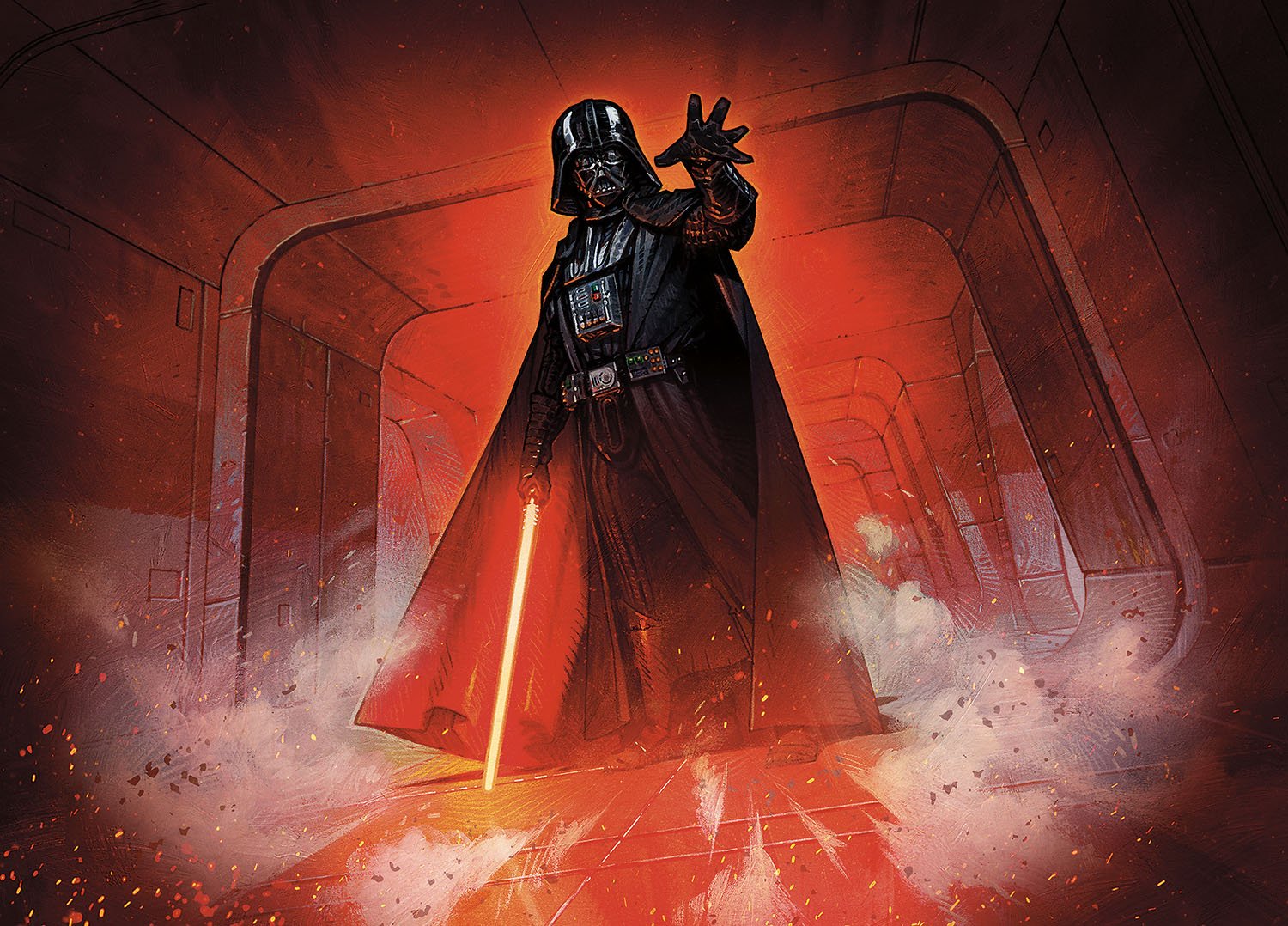
“The stronger the foundations, the more flexible and creative the collaboration can become.”
You have worked with many publishers, designers and art directors over the years. Looking across those collaborations, what do the very best publishing partners understand about working with illustrators that others sometimes miss — and what could publishers do better?
At the beginning of my career, I worked mainly in traditional publishing, and in the companies I worked with, art directors most often had a true artistic background, sometimes specifically in art direction. In boardgames, people come from much more varied backgrounds. Many publishers are first and foremost passionate gamers who later moved into publishing. They are also very frequently small companies where each person handles several roles. That’s obviously not a criticism, but it does mean that some people may find themselves doing art direction without necessarily having a precise understanding of an illustrator’s work—what it involves in terms of time, thought, mental load, workload or technical constraints. Sometimes the role being performed is closer to project management than to art direction as I had previously known it.
For me, the publisher has an essential role as both pivot and conductor. They are the interface between designers, illustrators and the realities of production. They are the ones who have the keys regarding costs, quotes, manufacturers, technical constraints and deadlines. A publisher who simply relays everyone’s comments back and forth without putting them into perspective or making decisions risks creating a kind of “cacophony” where, eventually, nobody is really deciding anything. That’s how you sometimes end up with compromises built on top of compromises, or soft consensus. The finished result can feel as if it was never really pushed all the way.
Understanding the process is also essential for establishing realistic schedules. Starting only from a production date and concluding that, for example, a month and a half remains for the illustrations doesn’t make much sense. You also need to work the other way around: “This is what needs to be done. How much time is actually required to do it properly?” If the answer is four months, then you immediately know there’s a problem that needs to be solved upstream.
Sometimes I also find myself with publishers telling me that my quote is too high, even though the rates I’m proposing seem perfectly reasonable, sensible and justified for the project as it has been presented to me. Sometimes the real problem is not necessarily my quote—it’s that their equation doesn’t work. Between the number of illustrations they are asking for, manufacturing and production costs, the expected retail price and everything else around it, the project itself may simply not be properly balanced. In a way, it has been thought through from the wrong end.
That said, a quote isn’t necessarily the end of the discussion on my side either. Staying flexible and willing to negotiate constructively matters, because a project has to be considered as a whole—the money involved, the people, the creative interest, the visibility, and what it may lead to in the long term.
In the same way, I struggle with situations where I’m told: “We trust you, go ahead, do whatever you want”, only for a list of comments to arrive once the work is finished... A commission is still a commission, but above all it’s a collaboration. I don’t have all the answers either, and I need to be challenged too—to have someone on the other side who can question things and push back while the direction is being shaped, so we can make the project stronger together.
Either it’s clearly framed from the start, or I’m completely given creative freedom. In that second case, it also means accepting the vision I’m going to propose. Adjustments are obviously always possible, but they should remain relatively minor.
When I propose something, it’s never random: it has been thought through, developed and built with intention. There has to be a form of mutual respect.
Sometimes I wonder whether certain choices are made more because someone wants a particular name on the box than because that illustrator is definitely the right person for the project. Not every illustrator is right for every project, and a poor match at the beginning can create a lot of problems later. However, the best publishing partners I’ve worked with are those who prepare a lot upstream, discuss things, think ahead and know what they want while remaining open to suggestions. I like visually well-developed prototypes: they don’t restrict me. They give me a clear understanding of the intention, and from there we can discuss, propose, transform, or decide whether or not I need to move away from what already exists. The stronger the foundations, the more flexible and creative the collaboration can become. For me, a good publisher is ultimately someone who knows how to choose the right people, give them a clear framework, listen to their expertise and, above all, fully assume their role as the conductor of the project.
What comes next?
“AI will not destroy our professions, but it may well destroy some of our jobs.”
Looking five or ten years ahead, what kind of profession do you think the next generation of board game illustrators will be entering? And what do you hope the industry preserves as it continues to change?
This is difficult to answer, because ten years ago I don’t think we would have imagined the industry as it is today. And new transformations are arriving—or are already here—particularly artificial intelligence, whether in illustration, game development, communication or elsewhere.
As far as AI is concerned, I have the feeling that it will not destroy our professions, but it may well destroy some of our jobs... I think that distinction matters. It may remove or transform a portion of the execution work that industries have always needed: the “little hands”, even the “mercenaries”—and I mean none of those terms negatively. People doing work that may be less visible or less exciting, but which is essential to how a sector operates. That is probably where some of the biggest disruptions will happen, and it may make entering the profession even more difficult...
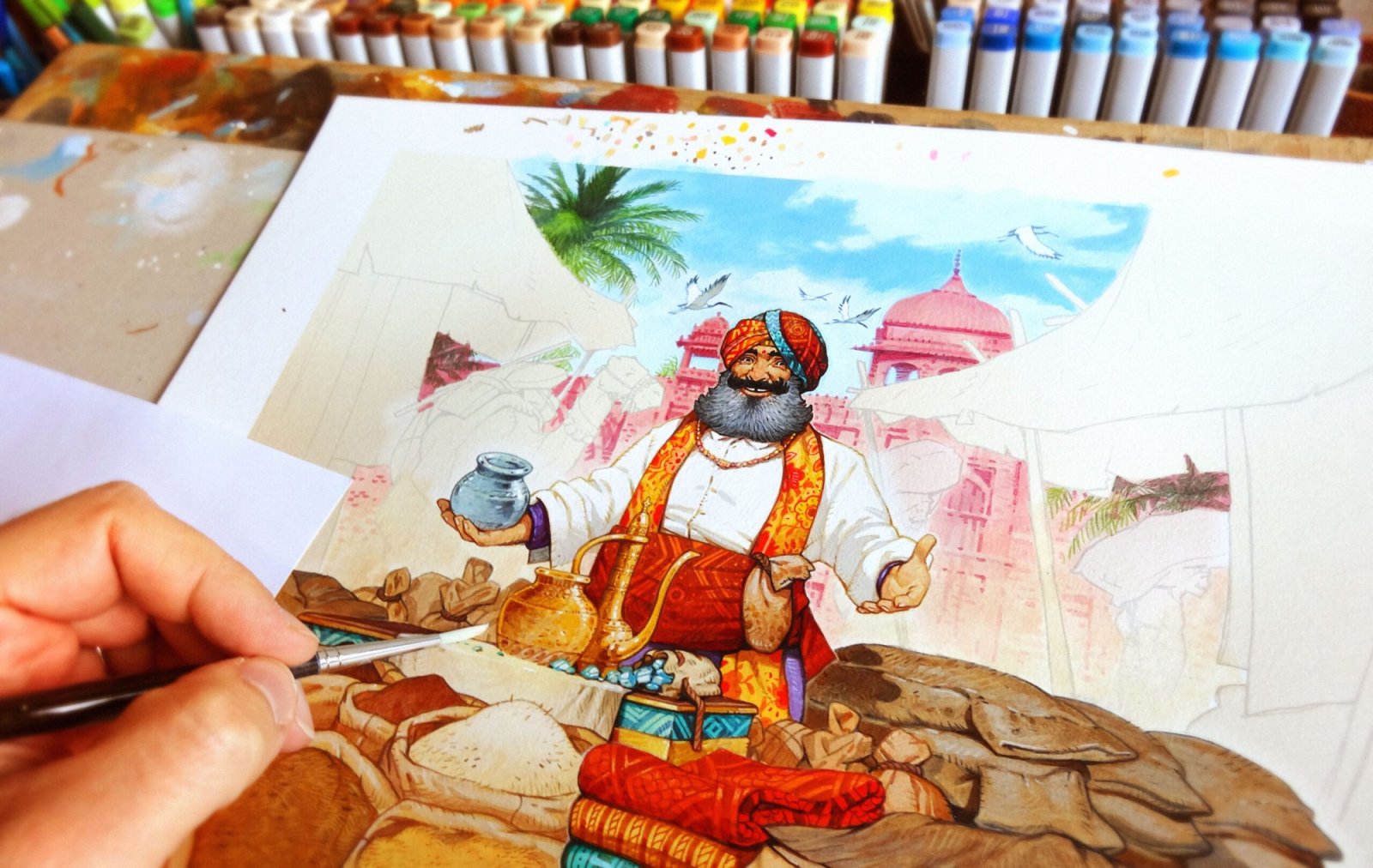
Paradoxically, since the rise of AI, I’ve personally never received so many work offers. Maybe there’s some kind of balancing effect: what we hand over to the machine on one side, don’t we sometimes feel the need to find again somewhere else in a deeply human form? In my case, I work traditionally, on paper. I make what I sometimes call “new old-fashioned work”. There may be something reassuring in that: a certain patina, a certain feel, something familiar. So I don’t think the need for art or images will disappear. But the place of the people making them may change profoundly.
For anyone starting today, I think it would be dangerous to ignore these transformations. Whether we like it or not, AI is now part of our environment. At the very least, you need to understand these tools, follow how they evolve and think about how to live and work alongside them. That doesn’t necessarily mean using them, but it’s difficult to position yourself in relation to something you don’t understand.
Personally, I struggle with the very polarised “with me or against me” attitude. I prefer to think that, after what will probably be a difficult period of transition and adjustment, several forms of creation may coexist, in different proportions. We are not going back to what existed before, but perhaps people working with images should also be allowed simply to be in a state of mutation.
I also think AI exacerbates certain flaws and tendencies that already existed in the image world. What has changed is their scale, the speed of production and the phenomenal quantity of images we are exposed to. But that’s exactly why I sometimes wonder whether the right response might be to show more of what we can do. At a time when some artists choose, for reasons I completely understand, to remove or show less of their work online, I wonder whether my personal response shouldn’t be the opposite: show beautiful images, show the work, show what a human, sensitive and carefully considered process can produce. Maybe we need to occupy the space more rather than withdraw from it?
I’ve already lived through one radical transformation with the arrival of digital illustration in the early 2000s. It didn’t particularly match the way I worked, but I understood that I needed to know what it could do and integrate whatever could improve my process without giving up what made my work distinctive. Today I still draw and paint traditionally, but I can recompose my hand-drawn sketches in Photoshop, prepare my files, adjust colours and deliver an image to the publisher that is completely ready for production, etc.
What I hope the industry preserves is precisely the space for those singular voices, for experimentation, for different paths and for the time that creation actually needs. Technology will continue to evolve whether we like it or not. The question is whether all of this can coexist without everything ending up looking the same.
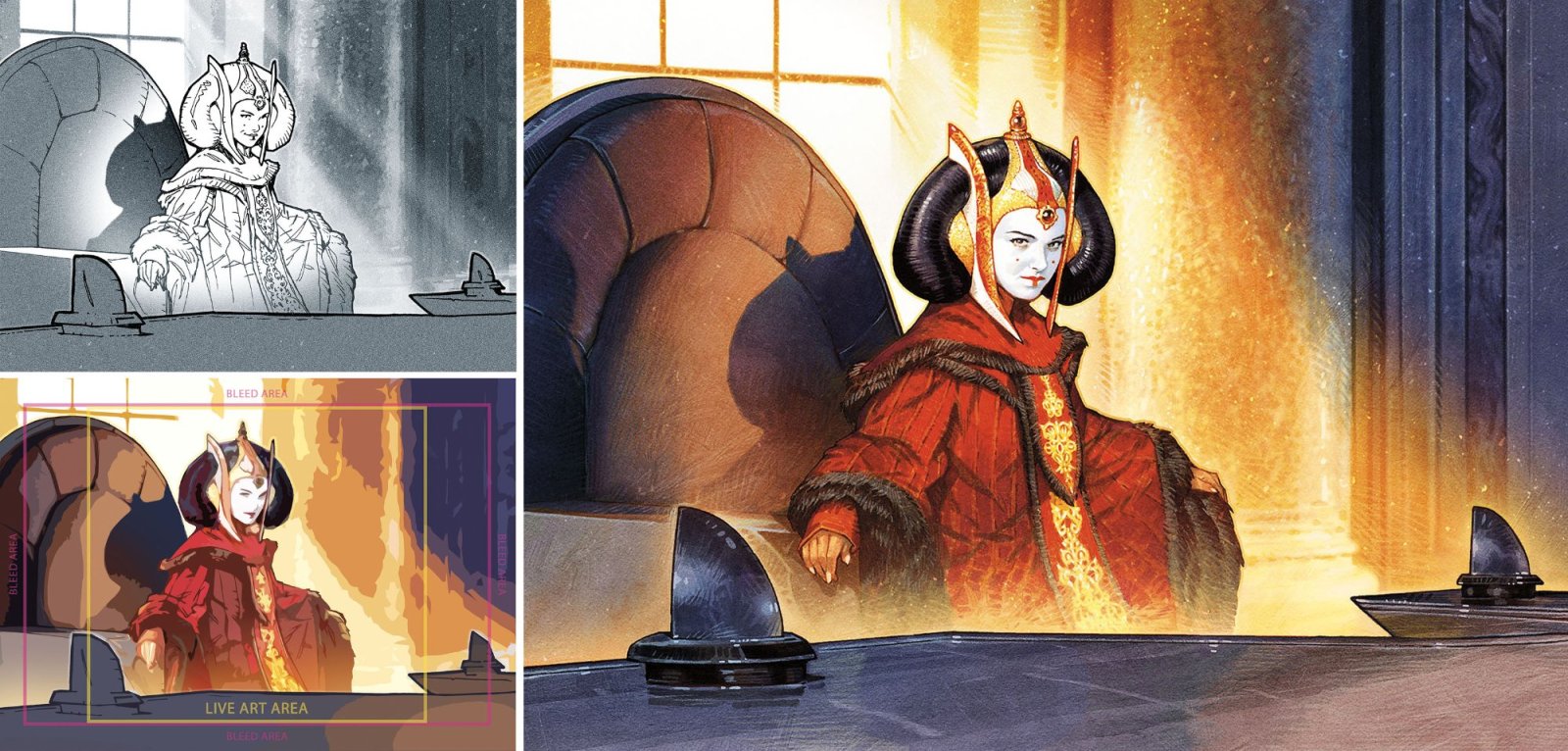
After nearly three decades as a professional illustrator, what are you still trying to improve, explore or understand yourself? What continues to make you excited when the next game arrives?
I’m still very much driven by exploration, discovery and curiosity. My goal is actually quite simple: do what I know how to do as well as I possibly can, and keep looking elsewhere for sources of inspiration, wonder and discovery that can enrich what I’m doing today.
I also don’t think we evolve in a linear way, following a nice steady upward curve. We move in stages. You progress, and then suddenly you find yourself at the foot of a step. You struggle, push, search, without necessarily being able to get over it. And then a meeting, a discovery or a project comes along and suddenly something unlocks. You reach the next step. Then the process begins again. So what I try to do today is put myself in a position where anything can happen. There will always be the project I didn’t see coming or a meeting that opens a direction I had never thought about.
At the same time, I understand more and more clearly what sits at the heart of my own work. And I realise that working traditionally, on paper, has an extremely precious place in it. For me, there’s also something very real and physical about the image. When I work, the illustration physically exists in front of me, on paper. It will then be digitised, go through computers, be prepared for production and printed, but in the end it returns to paper and physically ends up in the player’s hands. I really like that continuity, that almost material connection between the image I have in front of me while I’m making it and the one the player will eventually have in front of them. That’s something I want to cultivate even further. Where some developments may tend towards simplification, I want—without any misplaced pride—to push further towards sophistication, refinement and elegance. For me, that means refining, sharpening, mastering things further, always trying to raise the level a little.
And what still excites me when a new project arrives is often discovering the way someone has projected my work, my world or my sensitivity onto something they had in mind themselves. There is a kind of communion that happens at that moment between two worlds. It may be a project I would never have imagined for myself, or on the contrary something I had really wanted to do without ever saying so. Sometimes those two worlds meet almost by accident, sparks happen, and something appears that neither side had really seen coming.
Ultimately, I’m still driven by an idea of transmission and sharing: passing on images, worlds and know-how, sharing a passion, a sensitivity and certain values. And in my case, there is also a desire to pass on a certain tradition of what illustration can be. Not simply a technique, but an approach: a way of thinking about an image, building it, telling a story, looking, and making other people look. I want to preserve that heritage while continuing to move it forward and let it evolve in a deeply contemporary world.
Comments (1)
Have a BoardGameLink account?
Log in to comment with your profile and company name.